
Defense is the one part of rugby you can control without the ball. Attack depends on timing, handling and a little luck; a defensive system depends on effort and repetition. Get three things right — the tackle, the breakdown and line speed — and a side that loses the possession count can still win the match. What follows is a simple framework you can teach in a week and sharpen over a season.
Start With the Tackle, Because Everything Else Rests On It
No system survives poor tackling. If your first defender falls off the first contact, the rest of the line is chasing shadows. So build technique before you build structure, and coach the tackle in three parts.
Footwork before contact
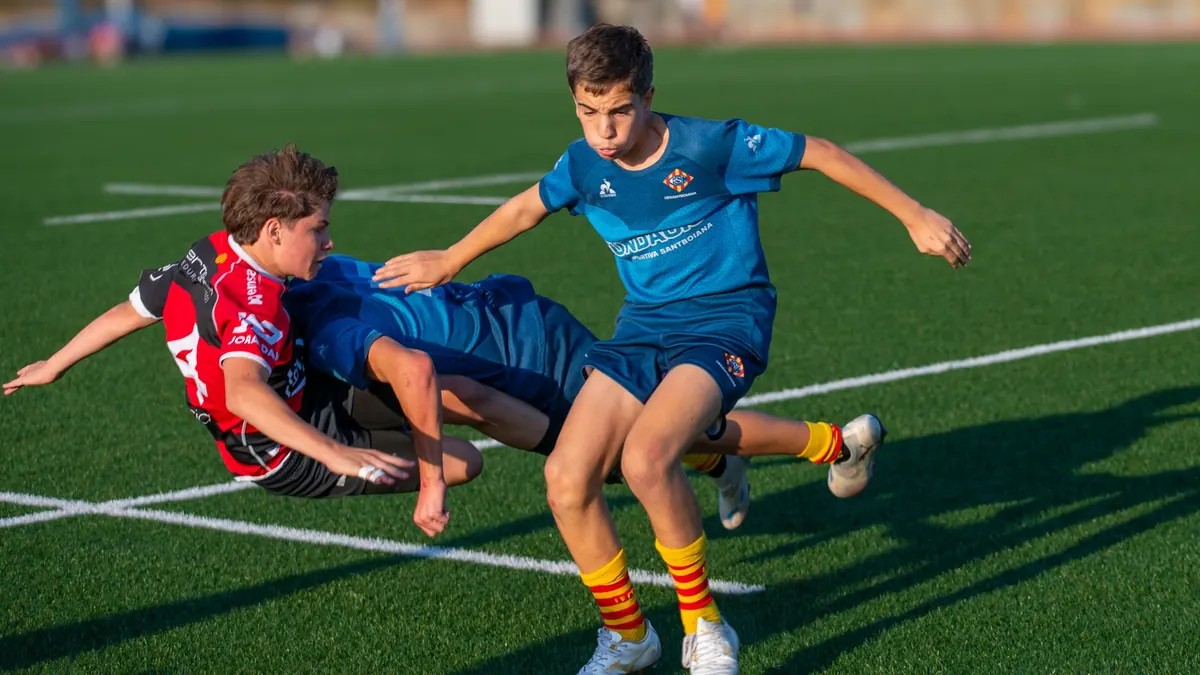
Good tacklers arrive short and low, not long and upright. The last two steps should be shorter and faster than the first ten. Target the ball carrier's thigh or waist with the shoulder, keep the head to the side — never in front — and be ready for a late step off either foot.
The hit and the finish
- Contact: shoulder first, head to the side, cheek close to the ball carrier's hip.
- Wrap: arms close around both legs — the wrap is what finishes the tackle, not the collision.
- Drive: short, punchy leg drive through the man and beyond him.
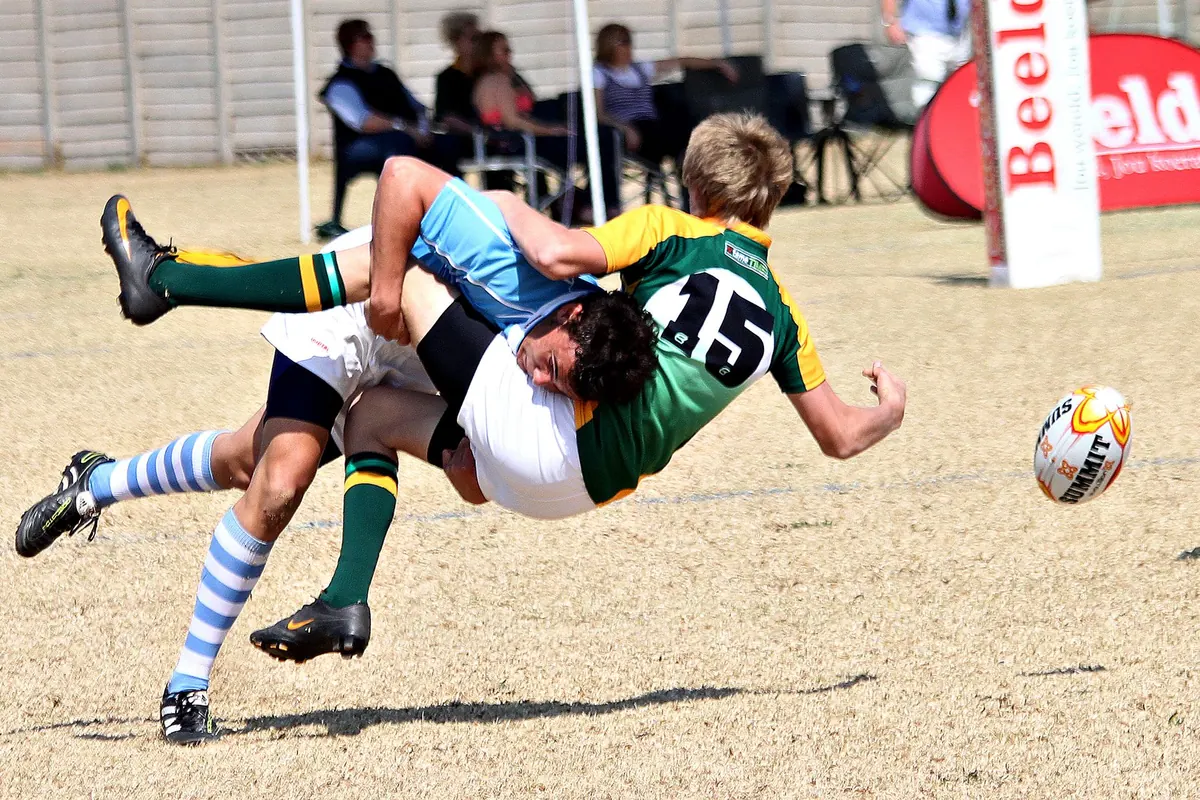
- Land and rise: finish on top, release, and get to your feet immediately. The tackle is not over until the ball is dead.
The usual faults are easy to spot: reaching with the arms, standing tall at the moment of contact, turning the head away, or trying to knock a player down rather than hold him. Ten minutes of bag work before every session will fix more than a long lecture.
Build contact gradually — kneeling, then walking, then jogging, then full speed. Many unions have lowered the legal tackle height in community rugby and apply their own variations on contact training, so check your governing body's current laws and coaching guidance before you run a full-contact session. Any player showing signs of a head injury should be removed and assessed by a qualified medical professional.
Turn Individual Tackles Into a Defensive System
One tackler is not a defense. A line works when every defender takes responsibility for a small piece of the field and trusts the person inside him.
The core principle is simple: line up on the inside shoulder of your opposite man. If you can always see the ball, you are probably too wide. If you are staring at your opposite number's chest, you are too tight.
Blitz or drift?
A blitz presses up hard and looks to hit the passer behind the gain line. It creates pressure, turnovers, and mistakes — and it also creates space out wide if one player arrives late. A drift pushes from the inside out, jockeys the ball carrier, and uses the touchline as an extra defender. Choose one, then coach it until it is automatic. A line that is half blitzing and half drifting is a line with a hole in it.
Two rules cover most errors. Nobody chases the ball across the field, and nobody shoots out of the line without being told to. A dog-leg of three metres is all an attacking side needs.
Line Speed Without Getting Beaten
Line speed is not about sprinting forward. It is about arriving at the right moment, together, under control. Move when the ball leaves the ruck, not before, or you will give away a penalty and hand the attack a free shot.
Coach the walk-through before you coach the sprint. At walking pace, have the line call the trigger and step forward as a unit. Then build intensity. Ask the defender closest to the ball to lead, with everyone else holding that same line — if the inside man is half a step behind, the outside men must not go early.
- Alignment walk-through: ten minutes, no contact, checking spacing and the inside shoulder.
- Three-on-three grid: defenders practice pressing from the inside out in a ten-metre channel.
- Numbers game: the coach calls a number and that many defenders press against a live attack.
- Conditioned set: full line defense for six phases, with the coach stopping play to correct the first error.
Give players a target they can feel: arrive as the pass is made, not after it. Once the ball is in the air, the nearest two defenders should be in contact positions.
Win the Ruck, or Slow It Down
The first defender to arrive after a tackle decides the next five seconds. His job is not always to take the ball — it is to make the attack's next phase harder than the last one.
- Jackal: stay on your feet, support your own body weight, come through the gate and get hands on the ball. Only go for it if you are genuinely first there.
- Counter-ruck: two players, low body height, driving through the middle rather than the edges.
- Slow the ball: body over the ball carrier, seal the space, make the scrum-half work for every pass.
Discipline matters more than aggression here. Players who go off their feet or enter from the side give away the penalties that turn good defensive sets into three points for the opposition. Train the breakdown at match speed with a referee or a coach calling, and let players learn what is legal under pressure rather than in theory.
Talk, Numbers and Trust
A defense needs one voice and a small dictionary. Keep the calls short: me, you, inside, hold, go. The inside centre or a nominated defensive captain calls the numbers so everyone knows who is taking the ball carrier and who is pushing out. Two defenders on one man is fine if one of them immediately works outward. Two defenders on one man and nobody on the next attacker is a try.
Don't forget the back field. Wingers drop to cover the space behind, the fullback sweeps, and the scrum-half guards the blind side. Attackers score more tries from kicks and turnover ball than from set-piece structure, so a defense that only looks forward is only half built.
A Simple Week of Defense Training
You do not need long sessions. Twenty sharp minutes beat forty-five tired ones, especially once contact is involved.
- Early week: tackle technique on bags and in controlled drills, no more than twenty minutes.
- Midweek: unit work on alignment, line speed and the blitz or drift decision.
- Late week: breakdown work plus small-sided games where turnovers and slow ball earn points.
- Match day: review the first three defensive sets, pick one thing, and coach that one thing for the following week.
Fix the Order of Priority
If your defense is leaking, do not rebuild everything at once. Fix the tackle first, because no structure rescues a missed one-on-one. Then fix the first defender at the breakdown, because slow ball gives your line time to set. Then work on line speed and shape, and only when those three are solid should you worry about the finer details of blitz timing or kick-chase organisation.
Keep it simple, repeat it weekly, and measure it by one honest question after every match: did we make the opposition's next phase harder than the last? If the answer is yes, your defense is doing its job.
Photo: Patrick Case / Pexels